
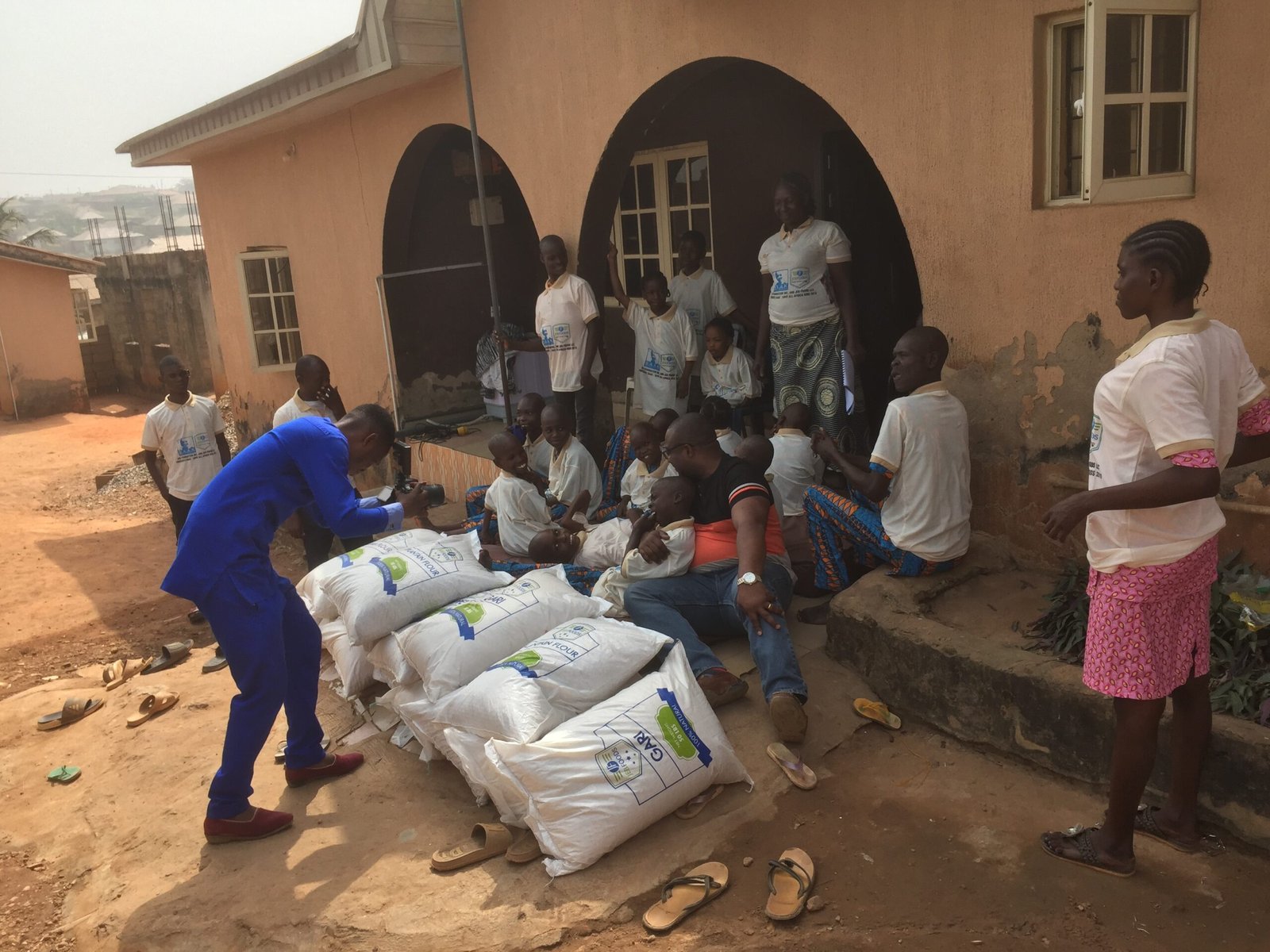
Orphans in Nigeria are not a distant statistic for us. Save All Africa Kids (SAAK) has supported Heaven’s Nest, an orphanage in Nigeria that cares for orphaned and severely disabled children, since our founding family first visited in 2010. This guide sets out what the most recent official data says about orphaned and vulnerable children in Nigeria, the problems they face every day, and practical, trustworthy ways you can help.
Every figure below comes from an official source that is named and linked in the text and listed again at the end. Where a commonly shared number could not be traced to a current official source, we say so rather than repeat it.
How many orphans are there in Nigeria?
The best national measure of orphans in Nigeria is the Multiple Indicator Cluster Survey (MICS) 2021, carried out by Nigeria’s National Bureau of Statistics with UNICEF and published in August 2022. Its table on children’s living arrangements and orphanhood covers 101,057 children aged 0 to 17. It found that:
- 7.9 percent of children aged 0 to 17 have lost one or both parents. That is nearly 8 in every 100 children.
- 0.7 percent have lost both parents.
- The share rises with age: 3.1 percent of children under 5 have lost a parent, compared with 15.9 percent of young people aged 15 to 17.
- 7.9 percent of children do not live with either biological parent, whether or not their parents are alive.
The survey also shows small differences between groups. Children in urban areas were slightly more likely to have lost a parent (9.0 percent) than children in rural areas (7.2 percent), and girls (8.2 percent) slightly more likely than boys (7.6 percent).
Most children who do not live with a parent are cared for by relatives. In the same survey, 90.8 percent of children not living with a biological parent lived in a household headed by a family member, and 55.1 percent were the grandchild of the head of the household.
You may see a figure of 17.5 million orphans in Nigeria shared online. We could not trace that number to a current official publication, so we do not use it. The MICS percentages above are the most recent official national measure we found.
What orphaned and vulnerable children in Nigeria face
Losing a parent can mean losing income, regular meals and the adult who makes sure a child stays in school and stays safe. UNICEF Nigeria’s own figures show how hard life already is for many children in the country.
Hunger and malnutrition
According to UNICEF Nigeria, Nigeria has the second highest burden of stunted children in the world, with 32 percent of children under five stunted. An estimated 2 million children in Nigeria suffer from severe acute malnutrition, and only two out of every 10 affected children are currently reached with treatment. UNICEF also notes on the same page that malnutrition is a direct or underlying cause of 45 percent of all deaths of children under five.
Health and survival
MICS 2021 put Nigeria’s under-five mortality rate at 102 deaths per 1,000 live births for the five years before the survey. In other words, about one in every 10 children born in that period did not live to see a fifth birthday.
School
UNICEF Nigeria reports that one in every five of the world’s out-of-school children is in Nigeria. Even though primary education is officially free and compulsory, about 10.5 million children aged 5 to 14 are not in school, and only 61 percent of children aged 6 to 11 regularly attend primary school. Education is one of the strongest protections a vulnerable child can have, which is why school support is part of SAAK’s work.
The gaps are widest in the north. UNICEF reports a primary net attendance rate of 53 percent in northern Nigeria, and female primary net attendance rates of 47.7 percent in the north-east and 47.3 percent in the north-west, meaning more than half of girls there are not in school.
Safety and legal identity
UNICEF Nigeria reports that six out of every 10 children in Nigeria experience some form of violence, and that of the children who reported violence, fewer than five out of 100 received any form of support. Only 30 percent of children under five were registered at birth. UNICEF describes birth registration as a child’s “first right” and a foundation for wider child protection.
Orphanages in Nigeria and family-based care
In July 2024 the Federal Ministry of Women Affairs, supported by UNICEF and SOS Children’s Villages with funding from the European Union, published the National Guidelines for the Alternative Care of Children in Nigeria. UNICEF describes them as a regulatory framework for a standard approach to services for vulnerable children without appropriate care, and as a turning point that recognizes the risks of exploitation, abuse and neglect faced by children deprived of family-based or appropriate alternative care.
For donors, two practical lessons follow. First, most children who have lost parents live with relatives, so help that reaches families and communities matters as much as help to children’s homes. Second, any orphanage you support should be working within Nigeria’s rules for alternative care and should be able to explain how children in its care are protected.
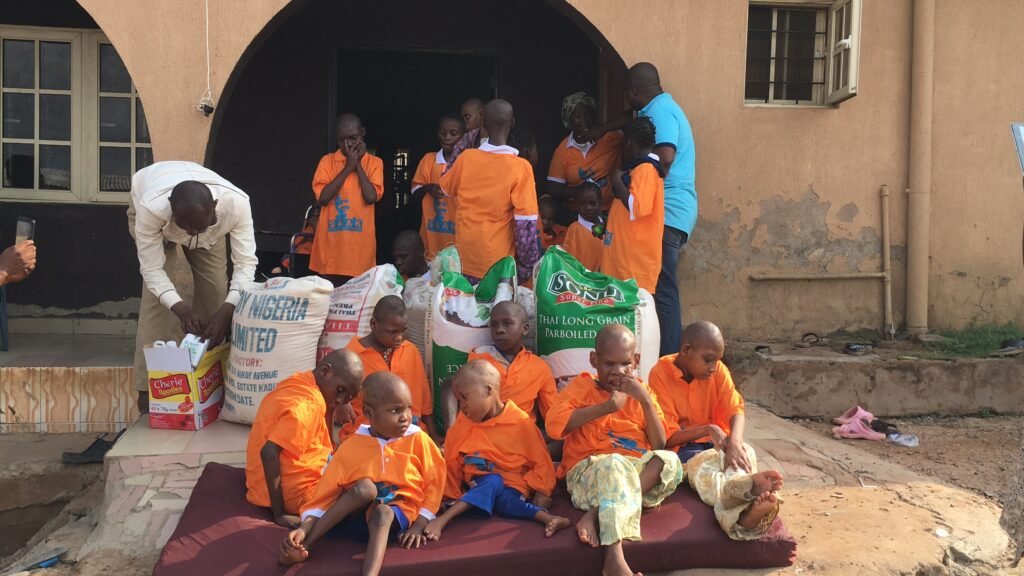
At SAAK, our primary partner has been Heaven’s Nest since 2010. Many of the children there are orphaned or abandoned and live with severe disabilities, which makes a stable, caring home especially important. You can read the full story on our Who We Are page.
How to help orphans in Nigeria
If you want to help orphans in Nigeria, or orphans in Africa more widely, these seven steps will make your support safer and more effective.
1. Give through a registered charity you can check
Before you give, confirm the charity is real. In the United States you can look up any tax-exempt organization with the IRS Tax Exempt Organization Search, read its public filings on ProPublica’s Nonprofit Explorer, and check its profile on Candid (formerly GuideStar). SAAK’s legal name is JEB Foundation, Inc., EIN 45-5431445. Our filings are on ProPublica, and our Candid profile carries a Gold Transparency 2026 seal.
2. Ask what your gift will buy
A good charity can tell you, in plain terms, what a donation pays for. For SAAK, it costs about $8 a day to feed one child at Heaven’s Nest, so $24 feeds a child for three days and $240 feeds a child for a month.
3. Give monthly if you can
Children eat every day, so steady support helps more than a single gift followed by nothing. A monthly gift lets a partner orphanage plan food and supplies ahead instead of waiting for the next emergency. You can set up a monthly gift on our Donate page.
4. Support education as well as emergencies
Food meets today’s need; school changes what comes next. Gifts toward school materials, mentoring and life skills help children build a future beyond the orphanage. With JEB FOODS, SAAK helped build and open a school at Heaven’s Nest in 2021.
5. Protect children’s dignity and privacy
Be careful with appeals that share children’s full names, medical details or private family stories. Children have a right to privacy, even when the cause is a good one. SAAK does not publish individual children’s personal records.
6. Give your time and your voice
Not everyone can give money, and that is fine. You can share this article, follow our updates on YouTube, or contact us to ask how your skills could help. See more options on our Ways to Help page.
7. Expect regular updates
A charity you trust should report back on what it has done with your support, with dates and evidence. SAAK shares program updates on our News page and on YouTube, and our public tax filings are available on ProPublica. If a charity cannot tell you what happened after you gave, ask before you give again.
How SAAK helps orphans in Nigeria
Save All Africa Kids is the registered alternate name of JEB Foundation, Inc., a New Jersey nonprofit corporation and 501(c)(3) charity. Our officers serve without pay. Here is what we have done so far:
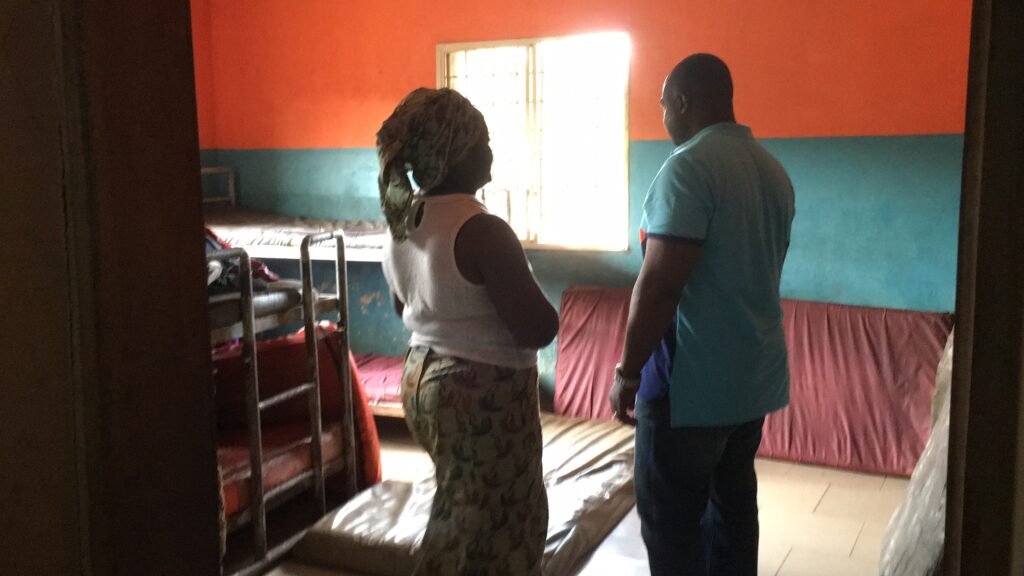
- 2010: our founding family first visited Heaven’s Nest and found children living on bare floors in dark, unfinished rooms.
- 2012: JEB Foundation, Inc. was incorporated in New Jersey to support the children.
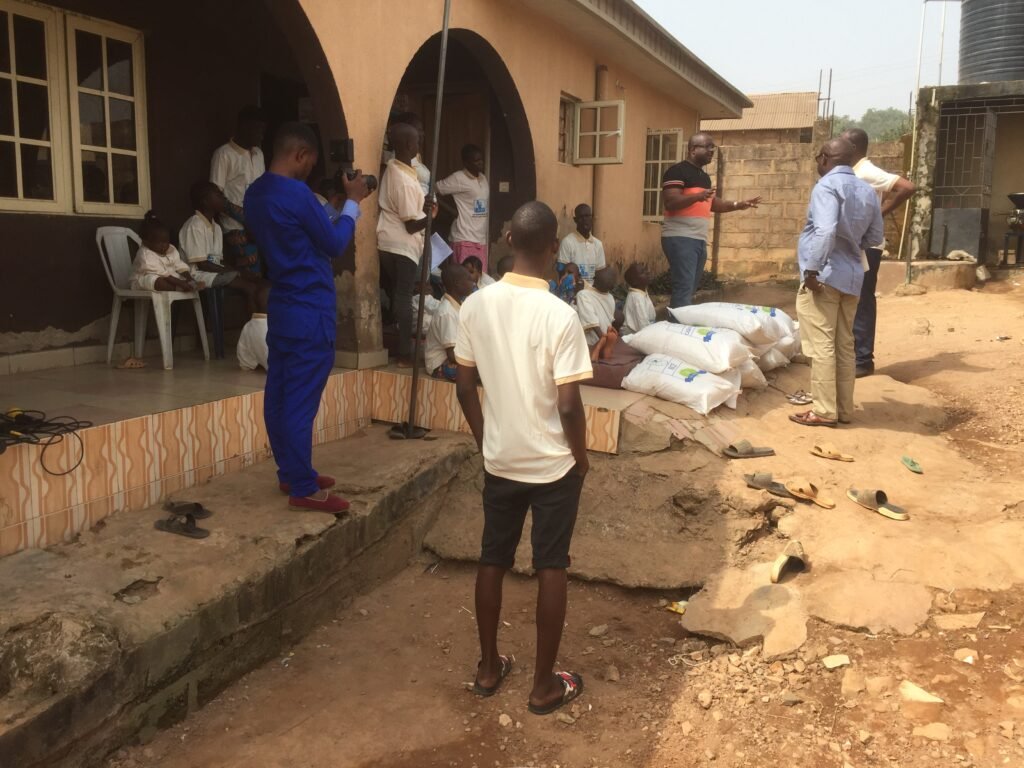
- 2016: SAAK provided new bunk beds with mattresses and held food distributions at the orphanage.
- 2018: our largest distribution so far brought food, clothing, medical supplies and educational materials to orphanage homes across Nigeria.
- 2021: with JEB FOODS, SAAK helped build and open a school at Heaven’s Nest.
- 2023: we partnered with local organizations to expand mentoring and life skills programs.
- 2024: our winter food drive provided meals and clean water to dozens of children.
Looking ahead, the SAAK Children’s Campus is our plan, now at the concept stage, for one safe, walled and gated site in Benin City, Edo State, where orphaned and underprivileged children can live, learn and receive care. You can also see what we send on our food and medical supplies page and watch our work in video.
Frequently asked questions about orphans in Nigeria
How many orphans are there in Nigeria?
Nigeria’s MICS 2021 found that 7.9 percent of children aged 0 to 17 have lost one or both parents, and 0.7 percent have lost both. We have not found a current official total count, so we report the official percentage.
Do most orphans in Nigeria live in orphanages?
The survey suggests not. Of children who do not live with a biological parent, 90.8 percent live in a household headed by a family member.
How much does it cost to feed an orphan in Nigeria?
Costs vary by place and partner. At Heaven’s Nest, SAAK’s cost is about $8 a day to feed one child.
Is my donation to SAAK tax-deductible?
SAAK (JEB Foundation, Inc.) is a 501(c)(3) public charity, so donations from U.S. taxpayers are generally tax-deductible as allowed by law. Please check with your tax adviser about your own situation.
Give hope to a child today
Every gift helps a child at Heaven’s Nest eat, learn and grow. Choose a one-time or monthly gift on our secure Donate page.
Sources
- National Bureau of Statistics and UNICEF, Multiple Indicator Cluster Survey 2021, Survey Findings Report (published August 2022), Table SR.11.1 “Children’s living arrangements and orphanhood” and Table SR.11.3 “Children not in parental care”; under-five mortality from the 2021 MICS Statistical Snapshots on the same page.
- UNICEF Nigeria, Nutrition.
- UNICEF Nigeria, Education.
- UNICEF Nigeria, Child Protection.
- UNICEF Nigeria, National Guidelines for the Alternative Care of Children in Nigeria (July 2024).
- Internal Revenue Service, Tax Exempt Organization Search; ProPublica, Nonprofit Explorer: JEB Foundation Inc; Candid, Jeb Foundation Inc profile.
Figures checked on October 24, 2026. SAAK program facts come from our own records and our public pages.